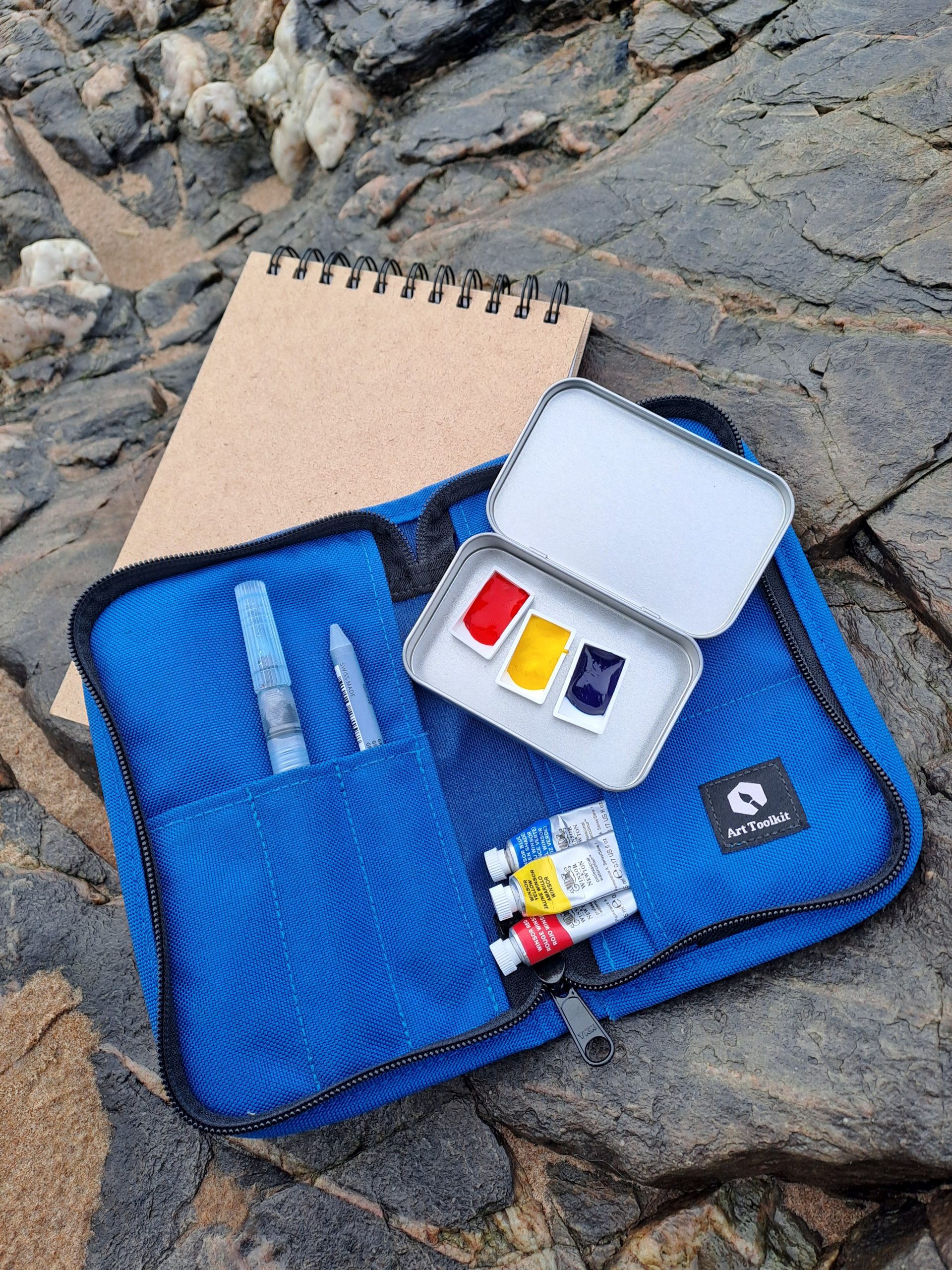
I have put together paint kits to show you my simplest and most ideal kit I would take outdoors with me for painting easily and productively.
This page is to show you what the kits contain and why, how I put them together and how you can expand your kit by yourself! These kits (not including the case) are available to purchase at my workshops and festival stands.
They include;
A watercolour paint palette
A waterbrush
A water based wax pastel
A sketchbook
A case to contain them
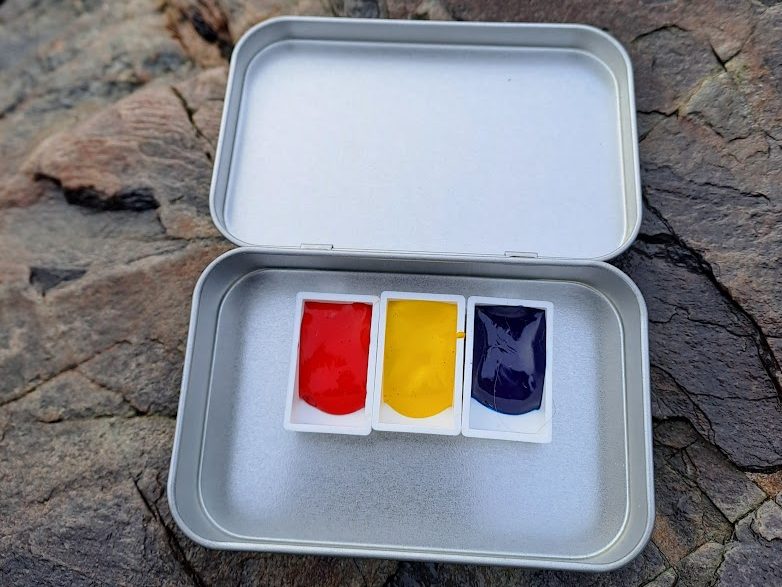
Paint Palette
This, very simple palette, is an aluminium tin containing 3 full sized paint pans. I fill the pans at least half full – usually about two thirds full! I buy the pans empty, squeeze paint into them from tubes, and put a magnetic strip on the bottom of them so they stay in place even when the palette is turned upside down.
I use full size paint pans as there is much more space for getting your brush in and mixing water around. The gradient of pigment also allows you to control the different concentrations of water and paint easier. You can mix colours in the lid of the tin, although I do recommend cleaning this regularly.
You can buy empty palettes online and that’s what I did for my main palette I use which is a bit larger than this here. I switched out the half pans for larger full pans.
Paint
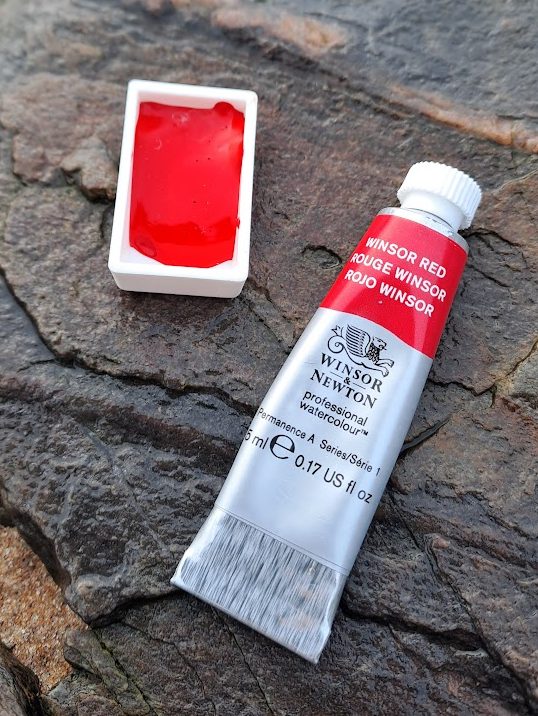
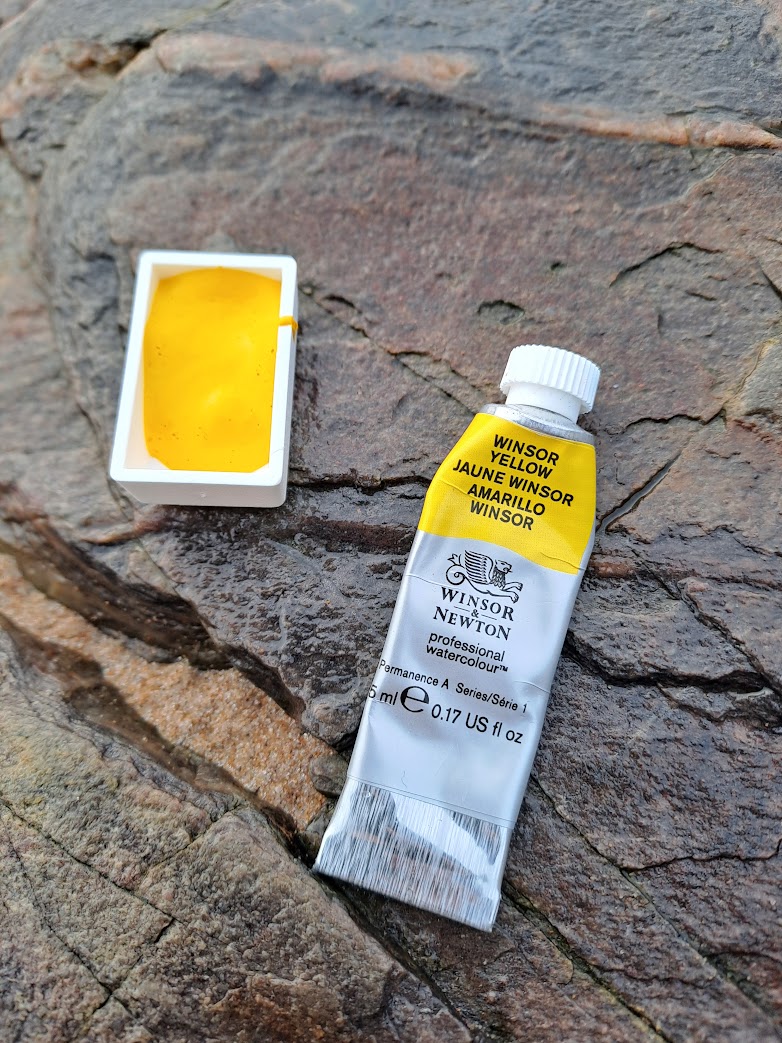
The paint I use is Winsor & Newton Professional Artist’s Watercolour paint in 3 primary colours I have chosen; Winsor Red, Winsor Yellow and Winsor Blue (Green Shade). You can buy tubes of watercolour paint in lots of different colours from a lot of stores, online or in person. We don’t have an independent art shop in Aberdeen sadly, so I buy tubes from Hobbycraft or order big tubes online For example here.
I chose these paint colours as they became the colours I most use in my own palette. A lot of brands publish their primary colourways, these aren’t actually the W&N primaries, but I prefer this set for Scottish landscapes! When you mix with them you can create lots of others colours which always look really good together. The idea here is that it helps you to learn fast about mixing colours and adding water.
Most beginners palettes on the market have small pans full of hard paint which are hard to soften up and get mixing with, plus far too many colours which don’t look nice together. I think this is this reduced palette is ideal and I often take it out with me! It’s great for beginners and experienced artists alike.
To make the palette I squeeze a bit of wet paint out of a tube into a pan and leave it in the open air to dry for at least 24 hours. You can mix them around to flatten them with a matchstick but I stopped doing that as I just decided it was wasting paint. I use them for a bit, and they can get quite dirty so I just put them under a gently flowing tap and rub off the dirty patches with a clean brush. I leave them to dry properly before adding new paint from the tube. I try to keep the yellow the cleanest, but the blue pigment is strong so doesn’t need to be as clean.
It’s normal to have a messy palette!
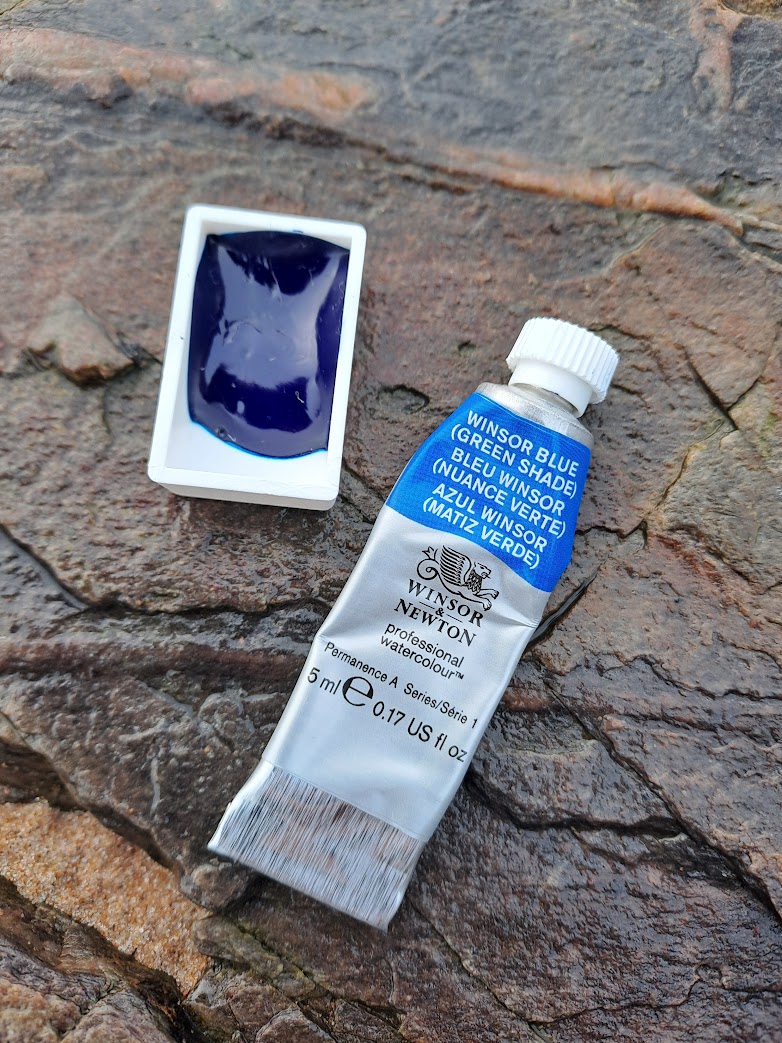
Scottish landscape primary colours selection
Paintbrush
When working outside, I always take a simple waterbrush with me. This one is the broad round brush by Pentel, as found here.
It takes a bit of practice to use these, but I find them really helpful. Water is stored in the handle and you squeeze it gently to push the water to the end of the brush. It’s really handy to not have to have a jar of water balancing next to you. They also fill up easily from a water bottle, stream or puddle.
You do need to take good care of them, and be careful to not reverse suck up pigment into the chamber but it’s easily rinsed out. The brush can stain a bit, and obviously they get a bit stagnant and mouldy if left for a while.
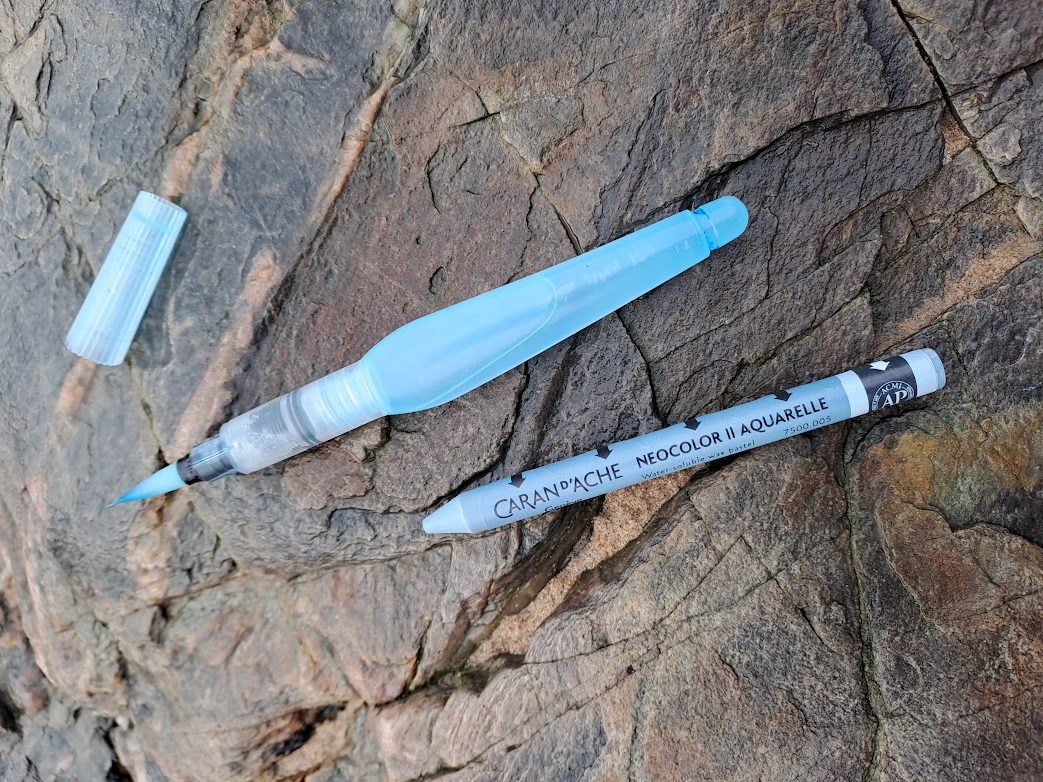
Water based Pastel
I’ve recently been getting into mixed media and a great way to try this is by using a water-based pastel. This is a really nice way to add interesting lines and it’s fun to play around with how the pigment reacts differently with water.
My go to pastel is the Caran d’Ache Neocolour II in Payne’s Grey. I also love having a selection of colours, I don’t recommend any of the sets as I find the colours a bit too vibrant. Good art shops like Greyfriars Art Shop in Edinburgh have selection in store and also online stores let you pick and mix like here .
Sketchbook
I use a range of all sorts of different sketchbooks. For my workshops I’ve been using the Artway ENVIRO Spiral Bound Recycled Sketchbook with170gsm paper in size A5 Landscape. I took this sketchbook with me on holiday to Norway!
When I was first getting into painting I used the most tiny sketchbooks I could find, but now I love to have has much space as possible. Often it depends on how much space I have in my bag. Try and find a fairly high gsm as this will soak up lots of water, but it also takes longer to dry.
Some of my favourite sketchbooks are the Speedball Linen Watercolour Journals, which come in lots of different sizes. I don’t recommend getting the basic ones you find in standard art shops. A little extra investment in a sketchbook means you want to use it more, it’s easier to paint with and you end up with a lovely book of memories which lasts for a long time.
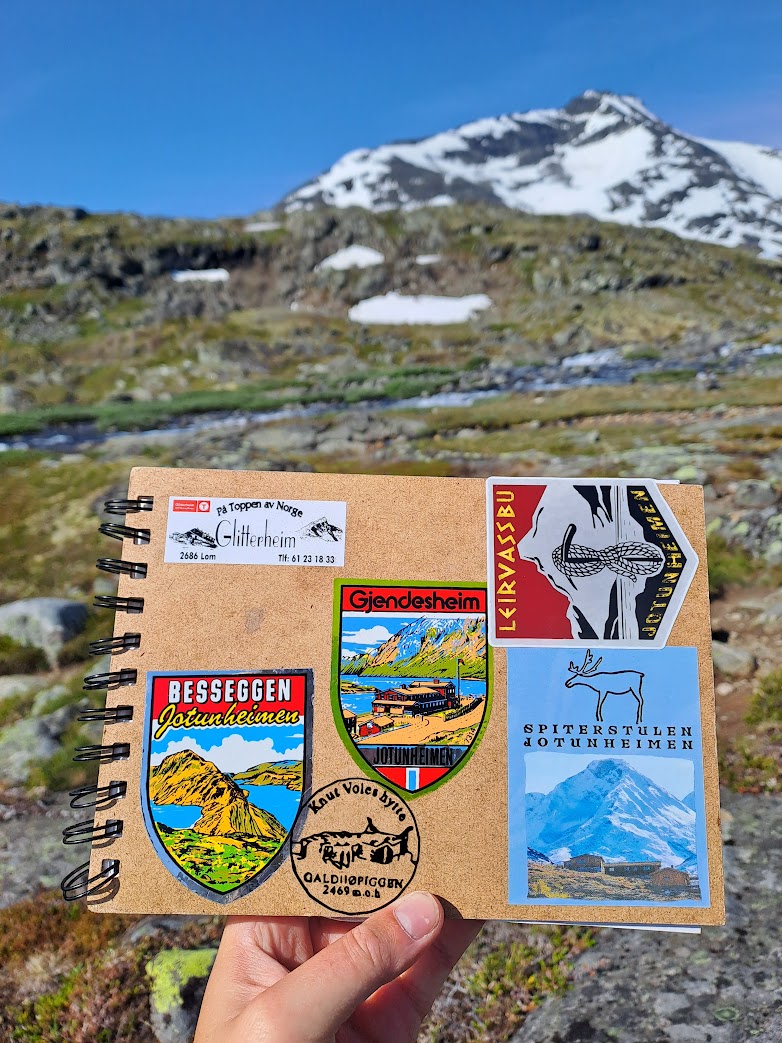
Artway sketchbook out on location in the Jotunheimen! Light, easy to use and a great cover for hut stickers!
Case
Keeping all your things together in your bag is pretty essential. You can use anything for this; a fancy case, a pencil case or even a plastic bag. I recommend just using something that is going to prevent any leftover paint water from flowing out into your bag and staining your spare layers or getting in your sandwich.
I have 2 ArtToolkit toolkits in Blue, a pocket toolkit and the A5 toolkit. I didn’t intentionally buy two as they are a bit expensive and you have to order them in from Canada as well. I ordered the A5 toolkit and they accidentally sent me the Pocket one. I mostly use the A5 toolkit as then I can put my A5 sketchbook inside too. You can buy them empty or with tools! I’ve had mine for 4 years and it’s definitely durable and feels like new!
I like having a canvas case as I can use it to dry off or clean my brush. But you can also use a trouser leg for this too! I don’t like to take tissues out and about incase they blow away.
Adding more……..
Once you start to feel comfortable and gain experience, you’ll begin to notice what you’re missing from your kit. It’s really personal to what you like!
I like to take with me more colours, which helps me to speed up when painting – but I always mix these in with my standard 3 primary colours. I have quite a few pastels I take with me, and also extra brushes in different sizes and shapes for making marks.
I have also started experimenting with taking inks and pencils for quick sketches, but nothing can replace watercolour for me!